From prehistoric beads to royal necklaces, discover how African beads code status, spirituality, and cultural belonging.
Since the dawn of time, African beads have told stories. They whisper to generations tales of power, spirituality, and identity. These small round objects, strung with care, are not just jewelry. They guard a deep cultural heritage that spans centuries.
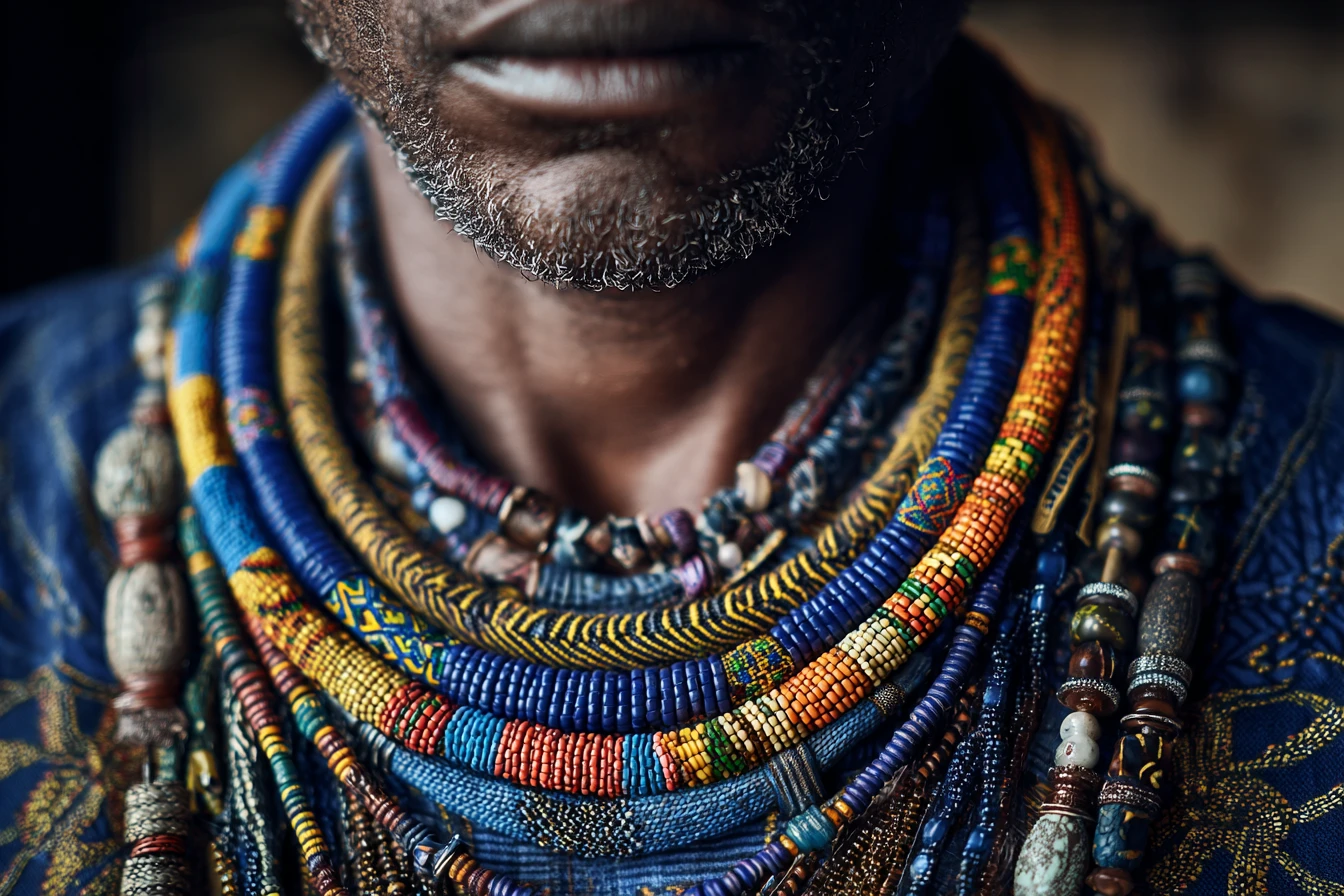
When a Krobo woman in Ghana wears her bright glass beads, she is not just adorning her body. She is asserting her rank, honoring her ancestors, and transmitting a coded message only the initiated can decipher. In Nigerian palaces, red coral beads adorn the necks of kings and testify to millennia of authority. In South Africa, young Zulu people craft colorful bracelets to declare love in a secret language where each shade carries a promise.
Yet this fascinating world often escapes the public eye. We admire the beauty of the adornments without grasping their symbolic weight. We collect African jewelry as simple souvenirs, without realizing they embody foundational pillars of entire societies—a dynamic tied to wider debates on protecting sacred knowledge from media greed, as explored in our piece on profaning African mysteries.
A prehistoric heritage carved in stone and bone: the origins of Africa’s first adornments
The story of African beads begins long before writing—over ten thousand years ago. Archaeologists have found primitive beads made from shells, polished bone fragments, animal teeth, clay, and seeds. Each bead represented days of work and a precise intention.
These first adornments accompanied the dead on their journey to the afterlife. They protected the living against invisible forces and marked the important moments of existence. A young man crossing into adulthood received his first beads. A woman becoming a mother saw her necklace enriched with new pieces. Long before writing, beads already served as collective memory.
With time, techniques improved. African artisans learned to work stone precisely and to create colored dyes. This technical evolution never erased the spiritual dimension of beads—on the contrary, it amplified it. In some societies, making beads became a sacred art reserved for families who passed down their secrets from generation to generation.
The rise of trans-Saharan trade introduced glass beads produced in Europe and Asia, revolutionizing styles and techniques. Each African region then developed its own traditions, creating remarkable diversity of forms and meanings.
A silent, rich language: when colors and materials tell a story
African beads form a complex, subtle language. They communicate information about age, social status, clan, region of origin, and even the emotional state of the wearer. This silent language, understood by the community, strengthens social bonds and allows quick identification within the group.
Each color carries a specific meaning that varies by culture. Among the Afar of Ethiopia and the Zulu of South Africa, white represents milk and fertility; red stands for life and good health. Red can also symbolize trust, vitality, or passion. Blue evokes wisdom and spirituality, yellow wealth and prosperity.
The material of beads often reflects social status. Beads made of gold, ivory, or precious stones are reserved for chiefs, notables, and high-ranking people, while wood, bone, or terracotta beads are more common among the wider population.
Mystery and magic: from sacred ceremonies to spiritual protection
Beads play a central role in major ceremonies, marking life’s milestones: birth, initiation, marriage, death.
At funerals, specific beads are worn as a sign of mourning and respect for the deceased, expressing the pain of loss and the link between the living and the ancestors.
Beads also contribute to expressions of femininity and sensuality. Worn at the waist or ankle, they highlight grace and beauty. This use, deeply rooted in tradition, is part of the art of seduction.
Among the Ewe people, beads play an important role in vodun ceremonies, adorning initiates when they leave the convent and distinguishing followers of one deity from another. From birth, they are said to help first teeth come in and protect children from infections. They are also seen as a shield against evil spirits.
More than beads—a living story: preserving cultural heritage in the face of modernity
African beads, far more than simple ornaments, resonate with the soul of a continent. They whisper ancestral stories, transmit precious knowledge, and weave invisible links between generations. At Betfrika, we believe it is urgent to rediscover these cultural treasures before modernity erases them.
These beads are not just objects of the past. They continue to shape identities, structure communities, and sustain a vibrant artisan economy. Looking at these tiny treasures, we touch the richness and complexity of African cultures—a living heritage that still inspires and amazes. Through them we embark on a journey to the heart of humanity, where beauty, spirituality, and identity intertwine to create a symphony of colors and symbols.

Betfrika Team
Insights & Perspectives
Sep 22, 2024