Why traditional festivals attract less interest in West Africa, and how to revive transmission, rituals, and community identity.
In West African villages, drums do not echo as loudly as they used to. Sacred masks stay inside the huts. Young people prefer their phones to the stories of the griots. This is the reality in many Togolese, Beninese, Senegalese, and Malian communities today: traditional festivals draw less and less enthusiasm.
Take the village of Koumbadiouma in Senegal. Thirty years ago, the harvest festival brought together all residents for three days. Masks came out of the sanctuaries, griots told the village history, and young people learned ancestral dances. Today this celebration lasts only one day. Many young people have left to work in the city. Those who remain join out of family obligation rather than conviction. The dances are shorter, the rituals simplified, the deeper meaning fades.
This scene repeats everywhere: initiation ceremonies that marked the passage to adulthood are shortened or abandoned, village festivals become secondary events, sometimes turned into folklore to attract tourists. This is not just generational disinterest. It stems from a complex web of factors that threaten West African identity.
Historical, economic, and cultural roots of erosion: colonization, globalization, urbanization, and misconceptions
Colonization played a major role in devaluing African cultures. Colonizers presented traditions as primitive, superstitious, incompatible with progress. Colonial schools taught that true culture came from Europe, that ancestral practices had to be abandoned. Even after independence, many Africans internalized this negative perception. Traditional festivals became synonymous with backwardness. Taking part could be seen as a barrier to social mobility.
Imported religions, especially strict forms of Christianity and Islam, demonized traditional practices. Sacred masks were burned, dances condemned as immoral, initiation ceremonies replaced by imported sacraments. This stigmatization created a painful break between generations, with young converts often rejecting their parents’ beliefs.
Massive urbanization distanced young people from villages—physically and culturally. In cities, festivals become impossible: no space for collective dances, no link with agricultural seasons, no sanctuaries for masks. Urban life imposes other rhythms incompatible with long ceremonies. Young city dwellers lose the connection to ancestral practices and no longer understand their deeper meaning.
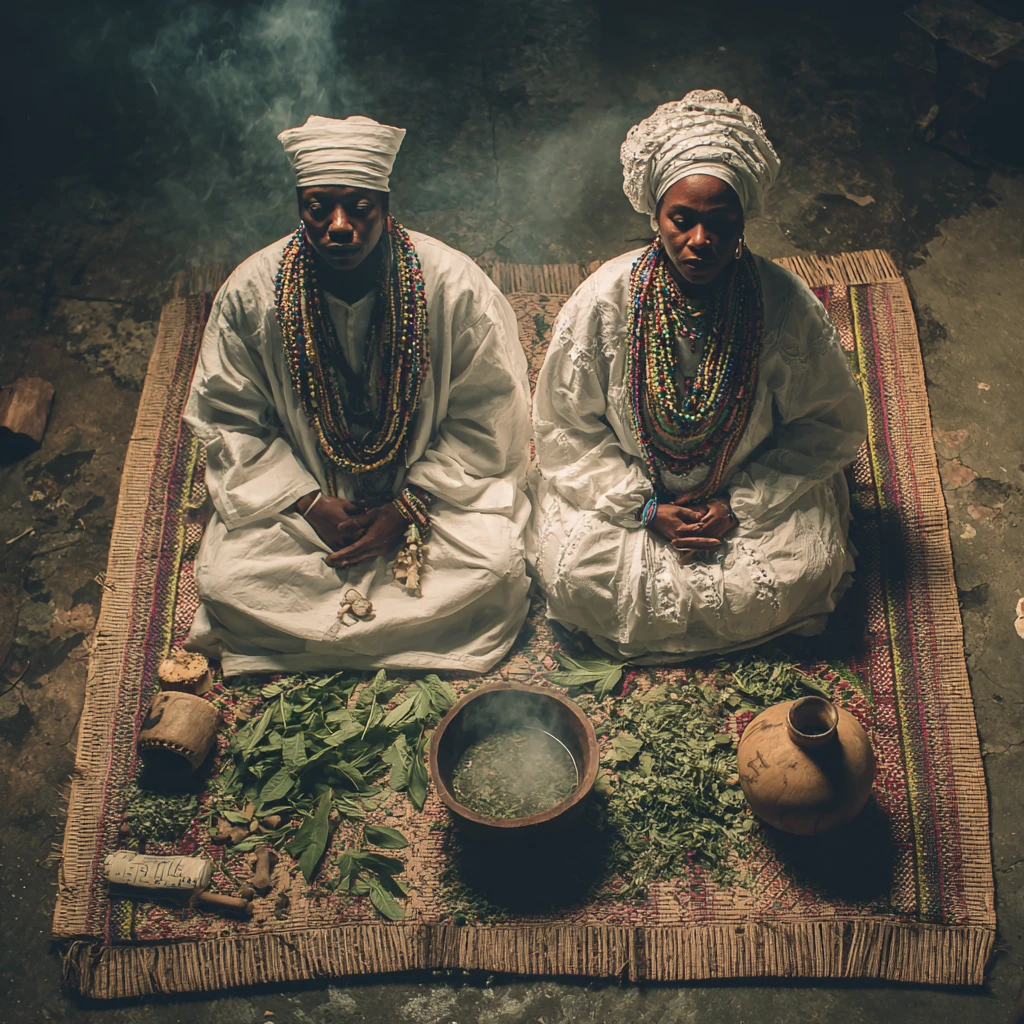
Globalization creates new, competing cultural references. Young people admire American stars, Indian films, Korean series. Traditional festivals feel outdated, incompatible with the modernity they want to project. Social media amplifies this in a paradoxical way: it gives global visibility to traditions, but videos of rituals circulate out of context, provoking misunderstanding and mockery—a modern profanation of African mysteries that breaks their magic. Every culture has its codes, and only insiders truly grasp the depth. Cultural symbols like beads, which once told stories of power and identity, lose their meaning for new generations.
The funding issue makes things worse. Organizing a large festival is expensive: feeding participants, paying griots, making masks and costumes, preparing offerings. With the breakup of family structures and village poverty, finding resources is a headache. Organizers must choose between maintaining the full tradition, which is costly, or simplifying it at the risk of emptying it of meaning.
Finally, misconceptions freeze traditions in a rigid perception. Many think they must remain exactly as they were a hundred years ago or lose their authenticity. This museum-like vision blocks necessary adaptation. Yet traditions have always evolved, integrating new elements while keeping their essence. Refusing any evolution condemns them to become dead relics.
Vanishing traditions, broken transmission, weakened identity: alarming consequences of cultural erosion
The consequences are tangible and worrying. Some traditions have disappeared completely. In Togo, certain Kabyè initiation ceremonies that lasted eight years are now performed symbolically over a few days. In Benin, some mask societies have vanished for lack of young members. The last holders of knowledge die without passing it on, taking centuries of wisdom with them.
Intergenerational transmission is badly damaged. Griots no longer find apprentices. Mask makers see their workshops empty. Ritual dances are no longer taught, replaced by TikTok choreographies. Traditional tales give way to imported cartoons. This cultural break particularly affects young people, who struggle to reconnect with their heritage. It creates a gap between generations; young people no longer understand the cultural references of their elders.
Cultural erosion leads to identity erosion. Losing traditions means losing what defines us and connects us to our community. Young West Africans find themselves in an uncomfortable position: too African to be accepted in the West, too westernized to feel at home in the village. This identity crisis creates an existential void that pushes some toward religious extremes or frantic consumption of imported cultural products.
Cultural symbols undergo a destructive transformation. Sacred masks are sold as tourist souvenirs. Ritual dances become stage performances disconnected from their meaning just like African beads reduced to simple jewelry even though they once coded social status and spirituality. Ancestral proverbs are forgotten, replaced by celebrity quotes. This folklorization empties traditions of their substance.
Paths to revival: documentation, community ownership, and youth involvement to rekindle traditions
Faced with this alarming situation, solutions exist. Rigorous documentation of what remains is an urgent first step: filming ceremonies, recording songs, photographing masks, interviewing the last knowledge holders. Digital technology, often blamed for erosion, can become a powerful preservation tool if used well.
Community ownership is essential. Traditions should not be fossilized in museums but remain living practices adapted to today’s realities. Community initiatives, youth involvement in tailored cultural projects, institutional support from governments, and backing from organizations such as UNESCO, which is working on the restitution of African heritage: all these approaches can slow erosion and reverse the trend.
Drums can resonate again, masks can leave the huts, griots can find their audiences. But that requires collective commitment, resources, and awareness: our traditions are not relics, but living resources to build a future that reflects us.
At Betfrika, we are actively committed to preserving and revitalizing West African cultural heritage. If you share this vision and want to contribute concretely to safeguarding our traditions, we invite you to join us. Whether you are a student, professional, artist, or simply passionate about African culture, there is a place for you on our team. Check out our volunteering and engagement opportunities on our Work with Us page or contact us at info@betfrika.org. Together, let’s keep our traditions alive and pass them on to future generations.

Betfrika Team
Insights & Perspectives
Apr 5, 2024